
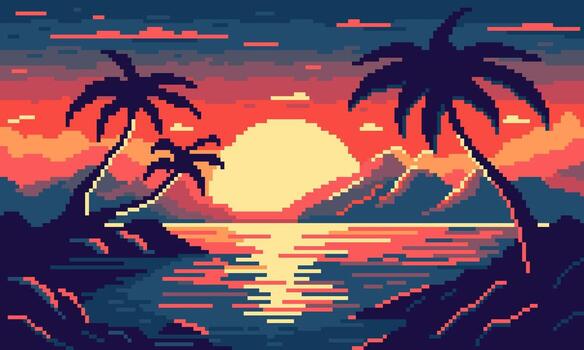
The simplicity of pixel art and its grid-based format is the final lesson in training one to master the basics of digital design. It compels creators to operate within 8-bit limits, removing all the modern elements of unlimited zoom or AI filters, showing the underlying concepts of composition, color theory, and visual communication. Not nostalgic game characters, pixel art approaches the ability to create skills that can be applied to user interface design, motion graphics, and branding the word goes that professionals in the indie scene all the way up to the Fortune 500 creatives are sworn to its clarity-making ability.
Mastering Composition Through Limitation
In pixel art, each 16×16 tile matters: each tile must be placed deliberately. Novices acquire the sense of balance immediately–symmetrical personalities are stationary, asymmetrical ones are in motion. The negative space is sacrosanct; it is the crowding that kills at small sizes. Familiarize yourself with the traditional methods: dithering is a non-anti-aliased gradient creation method, anti-aliasing is a pixel-by-pixel curve-smoothing method. These limitations reflect the actual design issues of mobile screens, print deadlines, client budgets, and lesson the economy of space. Redraw icons of contemporary applications at 32×32: now, Twitter birds and play buttons are full of expert hierarchy.
Color Theory Distilled to Essentials
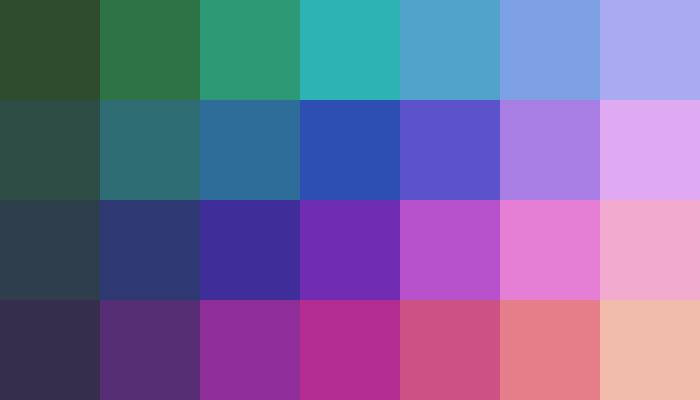
Minimal palettes (8-16 colors) make conscious decisions. Complementary pairs are popping, similar combinations are harmonic; tertiary accents are leading the eyes. Lighting hue changes are mastered by pixel artists- single pixel highlights sell the illusion of 3D. No Photoshop eyedroppers: blend tones using indexed color tables. This field makes color picking less a guess and more of a plan, immediately making the process of logo design, web palettes, and data viz. easier and more intuitive. Challenge: for a week, use only 8 colors, you will understand the rules of watch brands much better.
Understanding Resolution and Scaling
Raster reality is revealed by pixels: the images in bitmaps are not scaled well without careful planning. Artists have 2x and 4x canvases which are planned to be crisp enlarged, and learn to be limited by the vectors early. Export operations educate about PNG optimization (70 percent file reduction), format battles (GIF vs. WebP), and retina displays. It is a natural development of modern applications: 16×16 favicons warns 512×512 app icons; Game Boy sprites are promoted to social media banners. This vision aids in the avoidance of 90 percent of production redesign.
Animation Principles Via Sprite Sheets
Frame-by- frame pixel animation incorporates 12 rules of animation squash/stretch by single-pixel jumps, anticipation by 3-frame windups, easing by pixel-stepped arcs. Sprite sheets tell timing – 8fps is stuttering, 12fps smooth. Tracing back frames (onion skinning) is a practice that develops patience and precision, which is essential in Lottie files, GIFs, and micro-interactions. Contemporary payoff: pixel-perfect loading spinners, hover states, scroll triggers all borrow organic flow out of these origins.
Technical Skills Transferring to Production
The Aseprite or Lospec editors educate in layers, palettes, scripting, which is the basis of Figma, Blender, After Effects. CSS filters are informed by anti-aliasing techniques; Tailwind configs are fed by palette exports. Git processes are replicated through version control using .ase files. Bandwidth awareness (small files = fast loads) is a direct performance enhancer of web pages pixel art PNGs less than 2KB disgrace modern hero pictures.
Building Visual Problem-Solving Muscle
Practical Starting Path
Free editors, learn about OpenGameArt sprites, become members of r/PixelArt. Daily exercise: 64×64 characters within 30 minutes. Export to contemporary contexts, CSS sprites, NFT art, app icon. Monitor improvement: month 1 amateurs, month 3 professionals.
Pixel art reinvents design instinct. The truths that large canvases hide, Bigger start small, learn to master.